Welcome to Orime!
Choose your theme
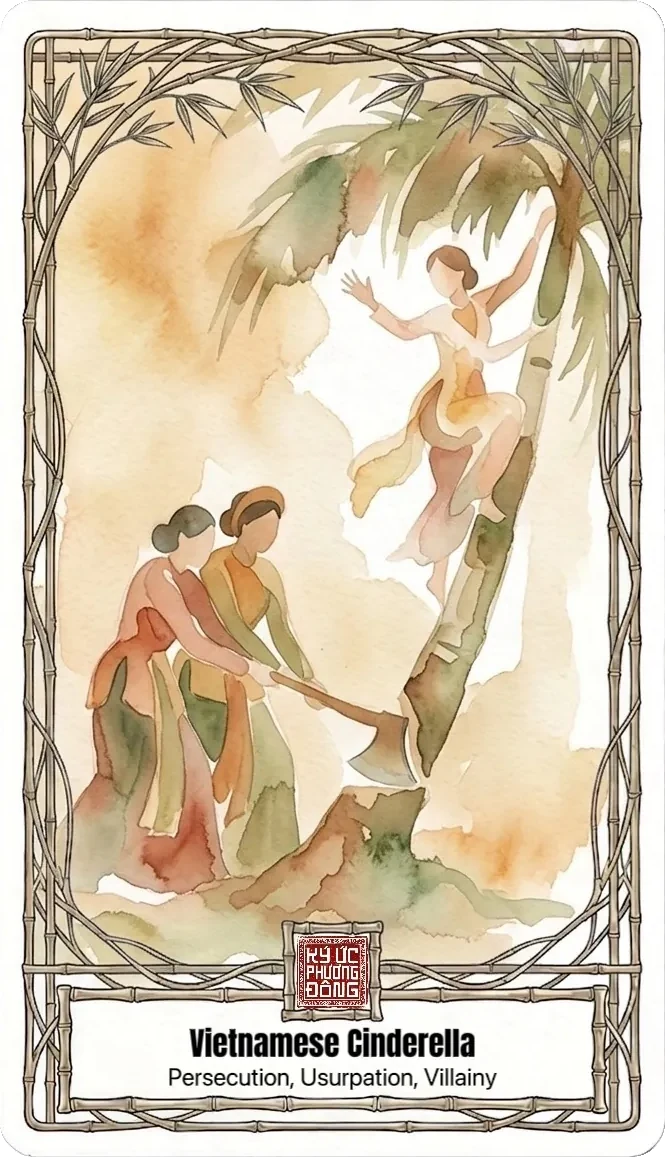
Vietnamese Cinderella
“High in the betel-nut tree, an axe bites the trunk — and a kind girl's whole world falls out from under her.”
| Vietnamese | Tấm Cám |
|---|---|
| Kind | Legends & Myths |
| In the deck | 1 of 90 cards |
The Story
Tấm grew up motherless, raised by a stepmother who saved every soft word for her own daughter, Cám, and every hard chore for Tấm. From dawn to dark, Tấm fetched water, husked rice, herded buffalo, and minded the fish in the pond. She did it without complaint — a girl so gentle she could not imagine cruelty until it was already at her door.
By a turn of luck and the quiet help of a guardian spirit, Tấm rose. A lost slipper found its way to the king, the foot it fit was hers, and the ragged stepchild became queen. It should have been the end of the story — the good girl crowned, the hard years behind her. But in this telling, the deck does not linger on the festival or the slipper. It walks straight into the room where the betrayal happens.
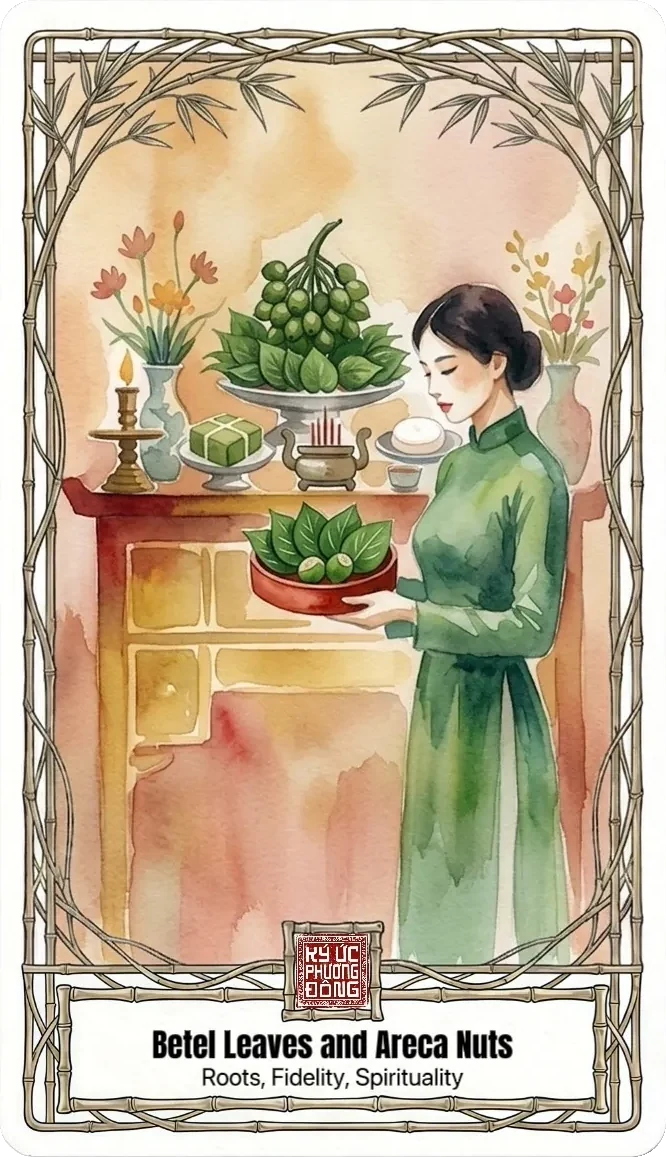
On the anniversary of her father's death, Tấm came home to keep the rites, as a faithful daughter must. Her father had loved the betel-nut palm in the yard — the areca, tall and straight — and so Tấm climbed it herself to gather the nuts and offer incense at the top, the way he would have wanted. While she clung there among the high fronds, her hands full of ritual and remembrance, her stepmother and Cám stood at the base with an axe.
They swung. Blow after blow, the blade bit into the trunk. Tấm, far above, felt the whole tree shudder and called down to ask what they were doing. "Only driving off the ants," they said sweetly — sweet faces, bitter hearts — and kept chopping. The palm groaned, leaned, and came down, and Tấm fell with it into the pond and drowned. In a single afternoon the queen was murdered by the two people who shared her own home, so that Cám could be sent to the palace to take her place — her crown, her husband, her life.
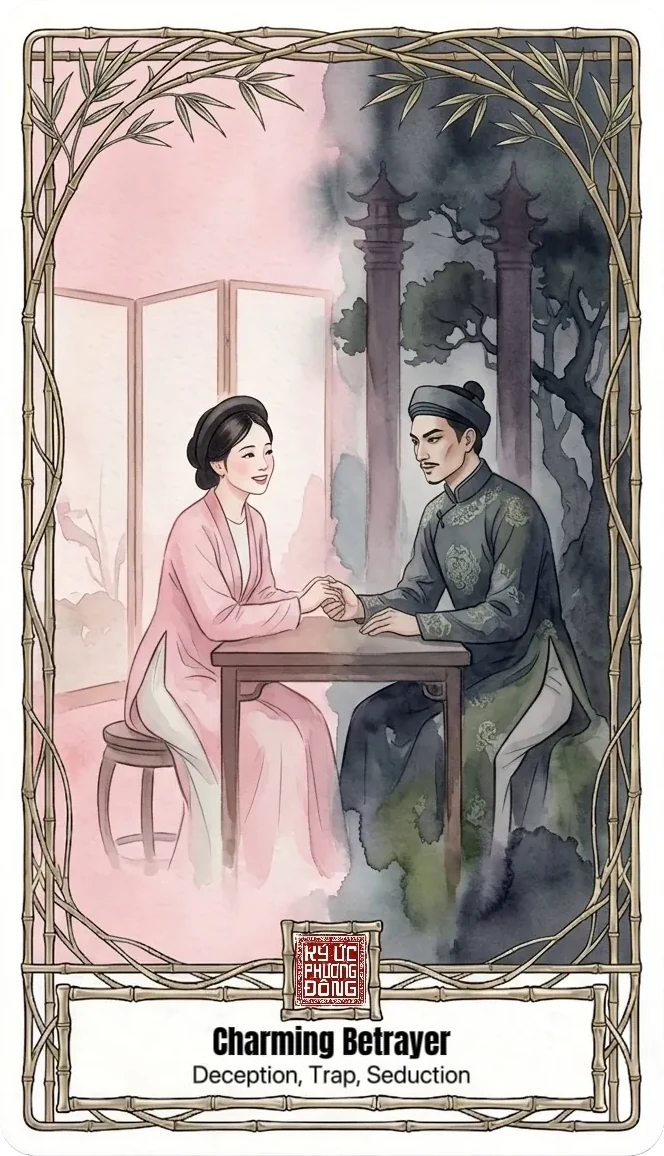
That is where this card stops to make you look. Not at the happy slipper, but at the felled tree: harm that comes not from a stranger on the road but from the kitchen, the family, the people you would never think to guard against. The usurper does not break down the gate. She is already inside, holding the axe and smiling.
And yet the old tale does not let the murder be the last word. Tấm does not stay drowned. She comes back as a golden oriole singing in the palace garden; when they kill the bird, she rises again as a tree; cut down, she returns inside a fruit, then steps out whole as a woman once more — softer no longer, but sharp enough at last to reclaim what was stolen. The girl who died in the pond is reborn, again and again, until justice is hers.
The Vietnamese tell it as Tấm Cám, their own Cinderella — but a fiercer one, where the heroine must die to her own innocence before she can win.