Welcome to Orime!
Choose your theme
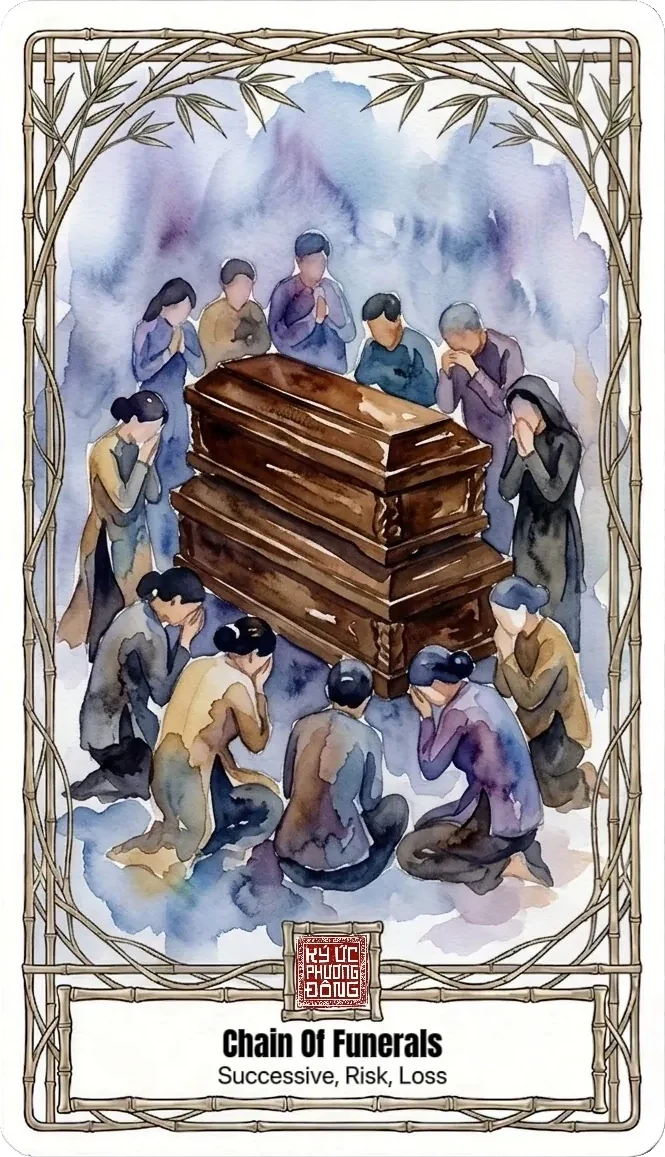
Chain Of Funerals
“In the old belief of Trùng Tang, the worry is that grief never knocks just once — and so the living learned how to break the chain.”
| Vietnamese | Trùng Tang |
|---|---|
| Kind | Traditions & Origins |
| In the deck | 1 of 90 cards |
The Story
Picture a Vietnamese village in the days after a funeral. The white mourning cloths are still folded by the door, the incense still curling over the altar, and the family is exhausted in the particular way that loss leaves you. And then, into that raw quiet, an old fear creeps in — a fear with a name. Trùng Tang. "Repeated mourning." The dread that a single death is not the end of it, but the first link in a chain, and that another, and another, may follow in its wake.
It is one of the heaviest beliefs in the folk tradition, and you can feel why it took hold. People watched, over generations, as sorrow seemed to come in clusters — one funeral, then a sickness, then a second loss before the first year of mourning was even out. They had no word for coincidence the way we do. What they had instead was a sense that misfortune has a current, and that once it starts running cold through a household, it pulls more grief along behind it. Old water, still and dark; the heavy earth of the grave. That was the feeling of it.
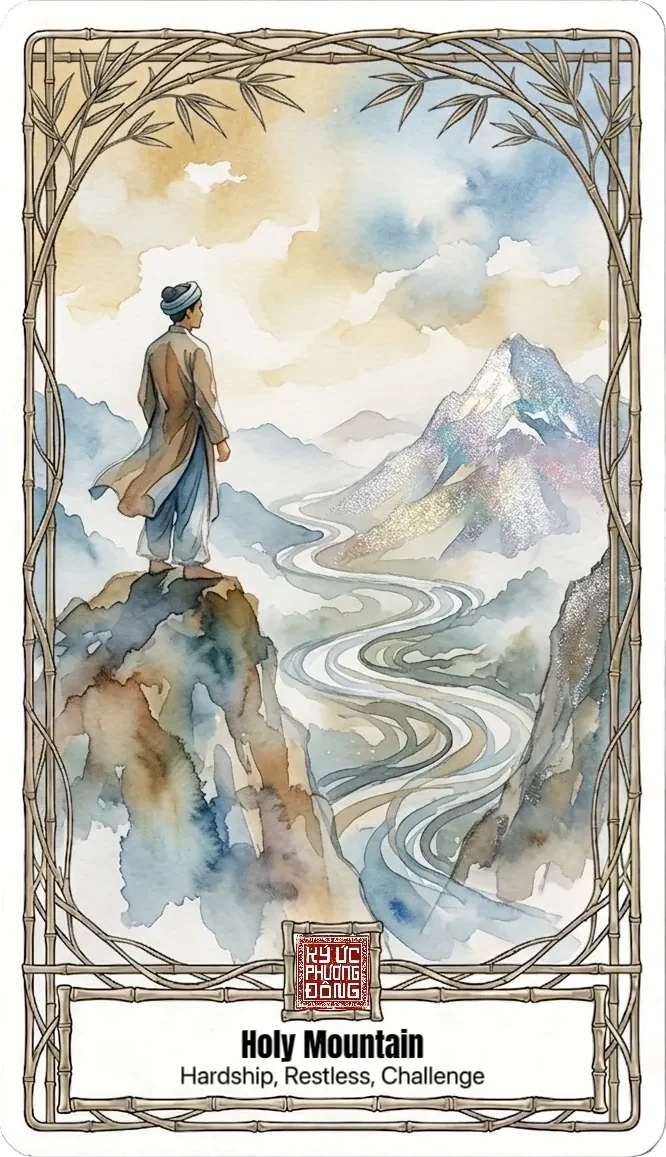
So they did not simply sit and wait for the next blow. They learned to read the calendar of a death — the hour, the day, the month, the year a person passed — to see whether the timing fell on what the old almanacs warned was a "trùng" hour, the kind that might call the cycle back. And where they sensed danger, they answered it. Families would go to the temple. Monks would chant. Some would carry a small charm, a folded paper talisman, up to a famous pagoda on the mountain and ask the spirit of the dead to be "held" there, gently kept apart from the living so the chain could not close around the household.
Strip away the spirits for a moment and you can see what the ritual was really doing. It gave a frightened, grieving family something to do with their hands and their hours. It pulled them out of the silent house and into the temple, among neighbors and bells and the steady voice of someone older who had seen grief before and survived it. It set a rhythm — chant, rest, gather, wait — over a stretch of time that otherwise would have been formless dread. The remedy for misfortune-in-waves was, in the end, community, patience, and the refusal to face the dark alone.
And underneath the fear there was always a second teaching, quieter but firmer. The old verse that travels with this belief says it plainly: misfortune never comes alone, sorrow returns, tears soak the summer — but calm your mind, gather virtue, and seek the path toward light, for after the deepest hardship, good fortune comes back. That last line is the whole heart of it. The tradition warns you of the chain, yes. But it never tells you the chain cannot be broken. Honesty and a kind heart, the verse says, are the only real talismans in a fierce storm.
That is the turn hidden inside the heaviest card in the deck. Trùng Tang names the moment when troubles seem to multiply — when an old unresolved problem breeds a new one, when you feel a current pulling you down faster than you can swim. But the elders did not see it only as a punishment. They saw it as a hard purification: the kind of season that strips away everything you were clinging to and leaves you, finally, with what actually holds. The densest part of the night is the part right before the sky begins to grey.
So the families lit their incense, said their prayers, leaned on one another, and waited for the dawn they trusted was coming. Not because the fear wasn't real — but because they had learned, link by link, how to keep it from owning them.