Welcome to Orime!
Choose your theme
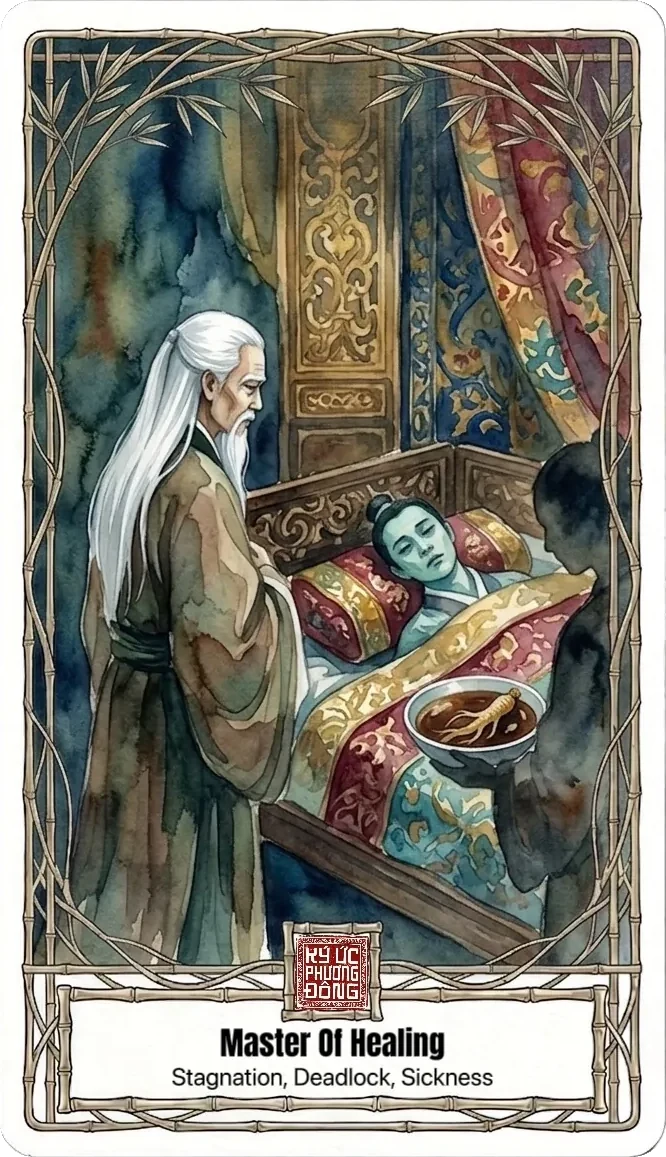
Master Of Healing
“Vietnam's greatest healer walked into a golden palace and saw at once what all the swallow's-nest soup could not cure.”
| Vietnamese | Hải Thượng Lãn Ông |
|---|---|
| Kind | Heroes & History |
| In the deck | 1 of 90 cards |
The Story
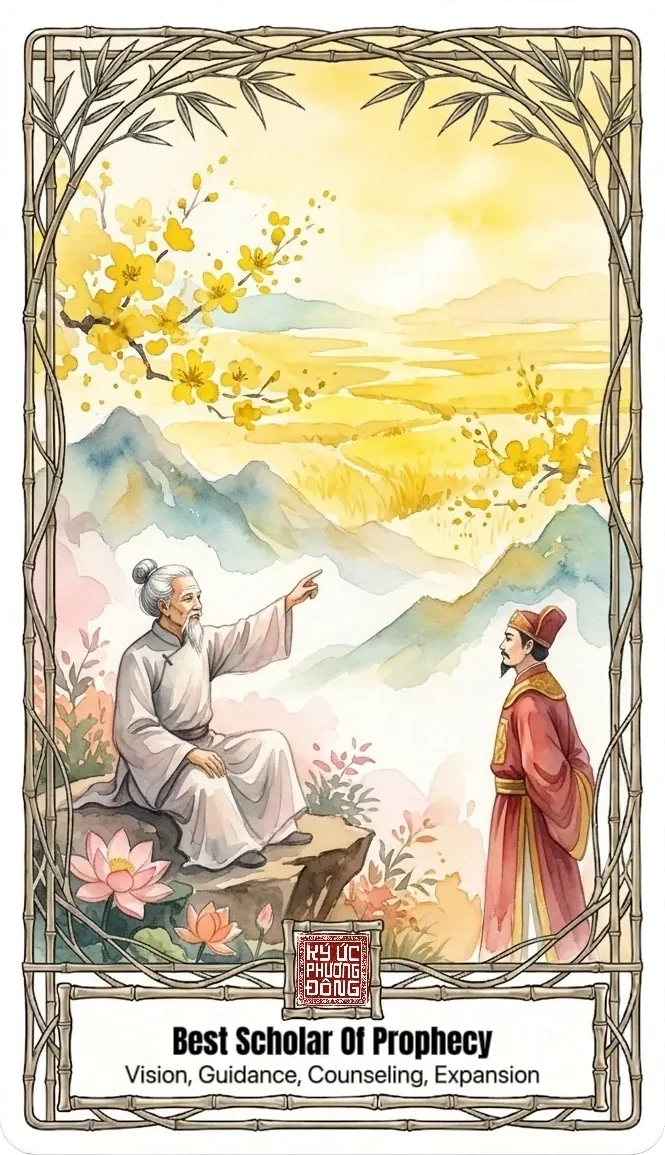
There was a man in eighteenth-century Vietnam who could have been a great soldier and chose, instead, to be a great doctor. His name was Lê Hữu Trác, though the country came to know him by a gentler title he gave himself: Hải Thượng Lãn Ông, "the Lazy Old Man of Hải Thượng." The name was a joke. He was anything but lazy. He had simply grown tired of ambition and the noise of the court, and he wanted to spend his days doing the one thing he believed actually mattered — keeping ordinary people alive.
He gave up a promising path in the army, retreated to the countryside, and gave himself completely to medicine. For decades he tramped from village to village with his bag of herbs, treating farmers and fishermen who could pay him in rice or in nothing at all. He wrote down everything he learned — thousands of pages, recipes, cases, failures honestly recorded — until he had built the largest body of medical writing his country had ever seen. To this day Vietnamese call him the saint of medicine, and his name still hangs over pharmacies and hospital wards.
One day a summons arrived that he could not refuse. Far away in the capital, the powerful Trịnh Lord's young Crown Prince had fallen ill, and the palace wanted the famous old healer brought to court. So the man who loved his quiet hills packed his bag again and made the long journey north — a journey he later set down in a beautiful, observant little book called Thượng Kinh Ký Sự, "A Record of a Journey to the Capital."
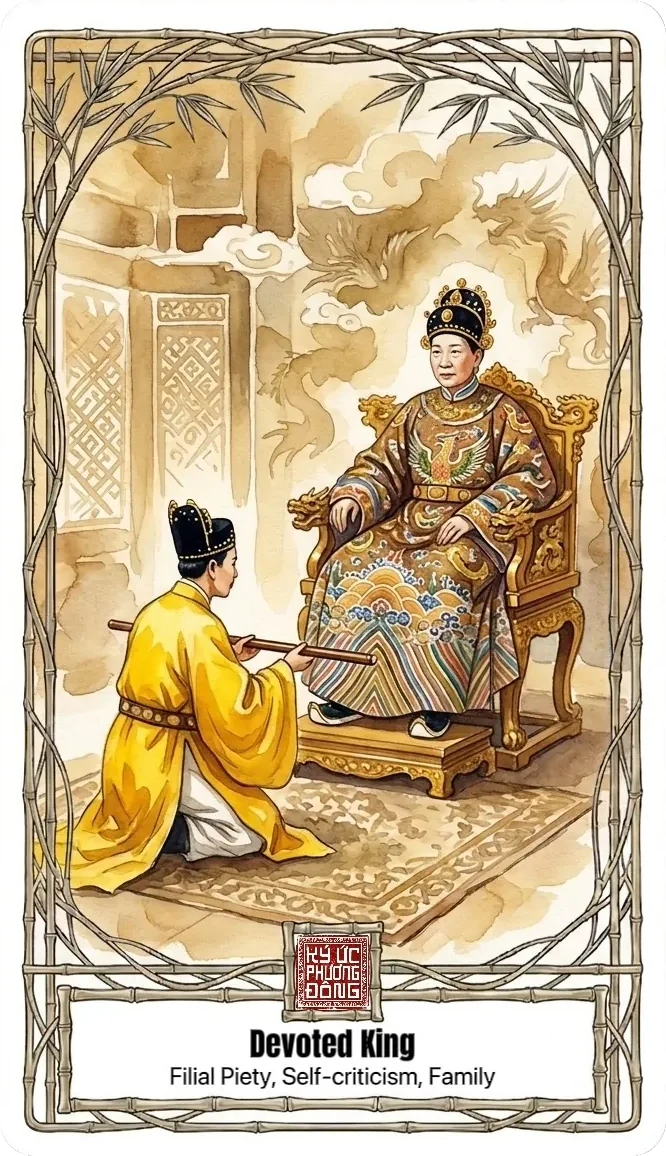
What he found there astonished him. He was led through halls sheathed in gold, past jade screens and silk hangings, deeper and deeper into a world of impossible luxury, until at last he was brought to the sick boy. The Crown Prince lived as no farmer's child ever could. He ate swallow's-nest soup and the finest ginseng. He wanted for nothing. Servants anticipated his every whim. And yet the child the old doctor knelt before was pale and listless, his little body soft and frail, his spirit somehow dimmed, as if something inside him had quietly gone out.
The Lazy Old Man understood the sickness immediately, because it was a sickness he had never once seen in the villages. The boy was not starving. The boy was drowning in plenty. Wrapped in silk, fed on delicacies, hidden away from sun and wind and ordinary dirt, he had been given everything a body could want and starved of everything a body actually needs — fresh air, movement, light, the rough living energy of the natural world. He was, in the old physician's eyes, suffering from the illness of the very rich: a stagnation that wealth itself had caused.
It was an uncomfortable thing to say inside a palace built to believe that gold could buy anything. But the doctor had not come all that way to flatter lords. He had come to tell the truth about a body, and the truth was that no amount of ginseng could substitute for a life lived in balance. The cure the boy needed could not be bought; it could only be given back to him.
So the saint of medicine delivered his verdict and, when he could, slipped gratefully back to his hills — leaving behind a small, sharp parable that has outlived the palace, the lord, and the prince. The man who treated the poorest peasants for free had looked upon the richest child in the land and found him the most undernourished of all.