Welcome to Orime!
Choose your theme
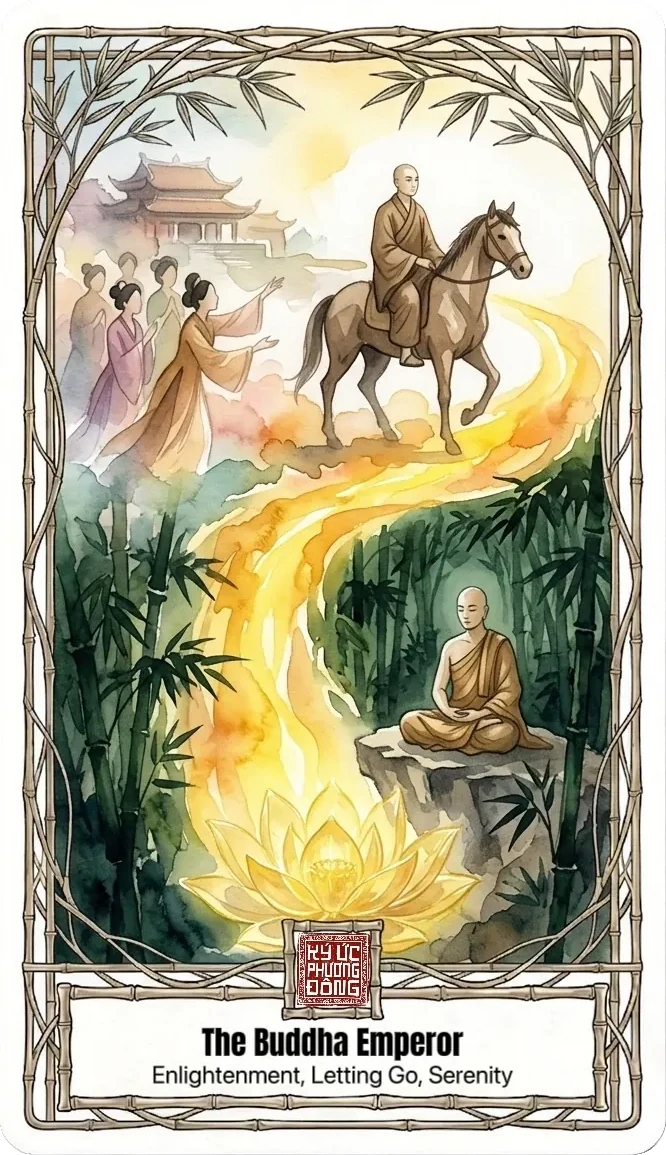
The Buddha Emperor
“He beat the Mongols twice, then walked away from the throne to climb a mountain and become a monk.”
| Vietnamese | Phật Hoàng Trần Nhân Tông |
|---|---|
| Kind | Heroes & History |
| In the deck | 1 of 90 cards |
The Story
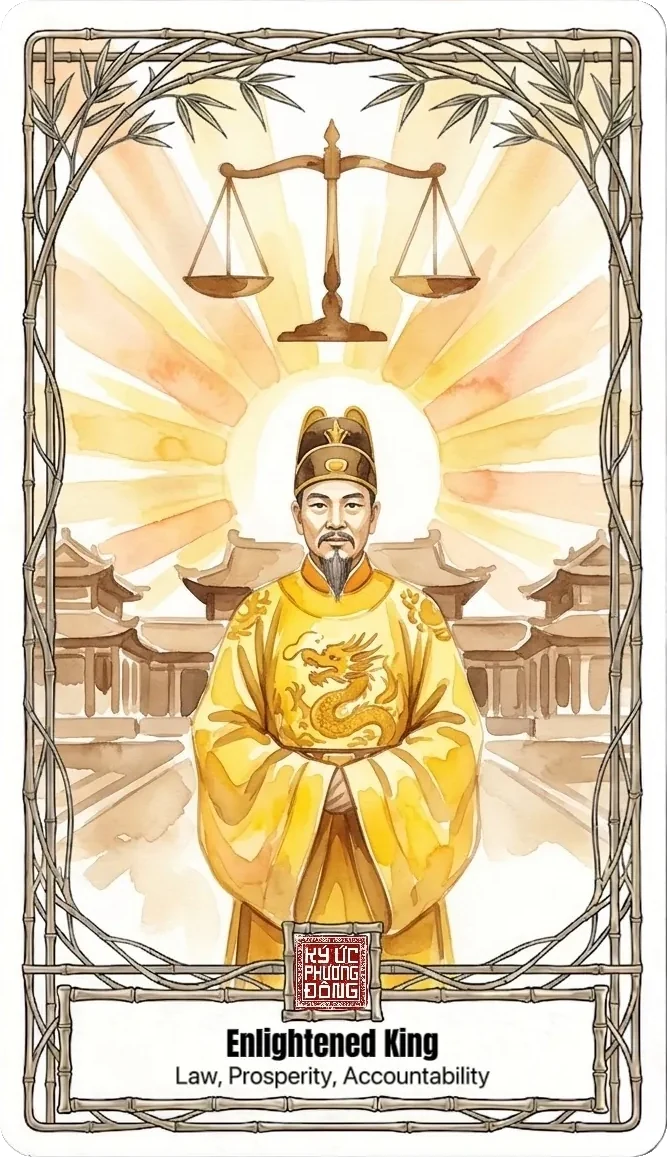
Picture a young king who has everything. The most powerful empire in the world is coming for his country, and twice he has to send them home in defeat. His name was Trần Nhân Tông (pronounced roughly "Chun Nyun Tong"), emperor of Đại Việt, the kingdom that would one day be Vietnam. History would give him a second title, one almost no other ruler has ever earned: the Buddha Emperor.
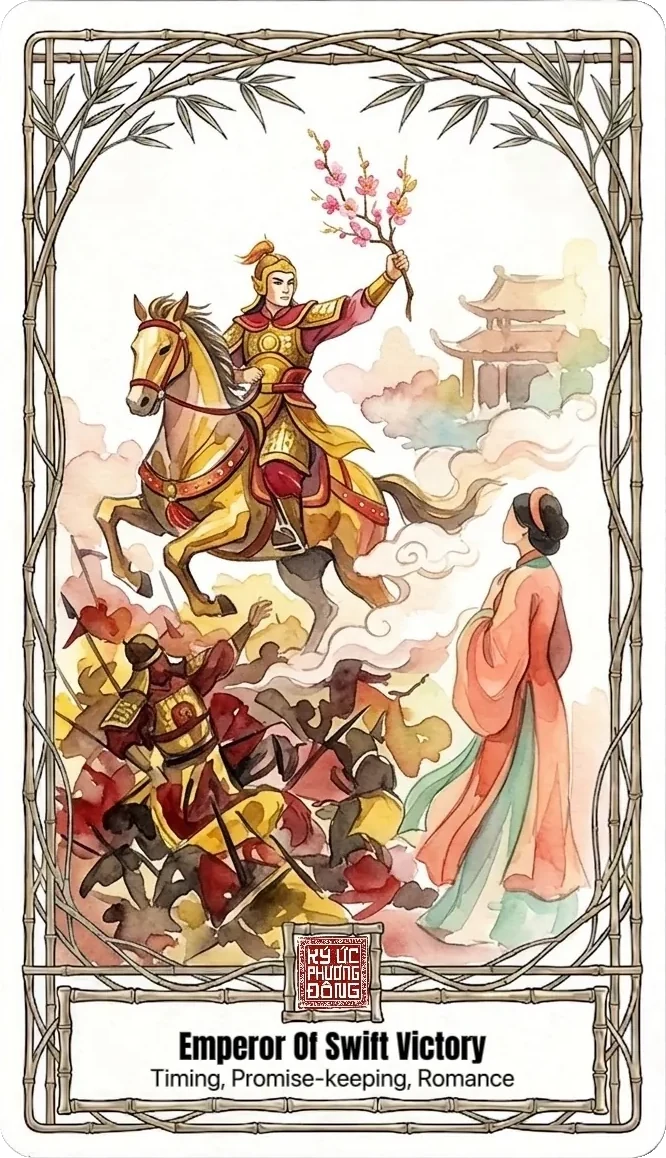
The threat was the Mongol Yuan dynasty, the same war machine that had swallowed China and ridden to the gates of Europe. Nobody expected a small kingdom of rice paddies and river deltas to hold. But Trần Nhân Tông did not panic and he did not flinch. He gathered his lords, asked them to their faces whether they should fight or surrender, and watched them tattoo the words "Kill the Mongols" onto their own arms. He let the enemy march deep into the country, then struck when their supply lines were stretched thin and their horses were starving in the wrong terrain. Twice the invaders came, and twice they were broken and driven out.
Here is where the story turns, and where it stops looking like any other tale of a victorious king. At the very peak of his power, with the nation saved and his name written into legend, Trần Nhân Tông handed the throne to his son and simply let it all go. No defeat sent him away. No scandal, no broken heart, no exhaustion. He stepped down from the most glorious seat in the land because he wanted something the throne could never give him.
He went to Yên Tử ("Yen Too"), a tall, mist-wrapped mountain in the north, and there he became a monk. The emperor who had commanded armies now swept his own floor, ate plain food, and sat in silence among the pines and the clouds. From that mountain he founded a school of Zen Buddhism all his own, called Trúc Lâm, the "Bamboo Grove" lineage, and it took root so deeply that it is still practiced in Vietnam today, more than seven hundred years later.
What made his Zen different was that it refused to hide from the world. He had ruled, he had fought a war, he had governed millions, and he carried all of that wisdom up the mountain with him. He taught that you do not have to flee life to find peace, that a person can stand in the middle of human affairs, do their duty fully, and still keep a quiet, unshakable center. The sword when the country needs it; the open hand when the moment passes. He had lived both, and he taught both.
When he died on Yên Tử, the legend says he passed away calmly, sitting upright in meditation, as though he had simply set down one more thing he no longer needed to carry. The kingdom mourned a king. The faithful gained a master. And Vietnam kept, in a single life, its rarest kind of hero: a man who could win the world and then prove he was free of it.