Welcome to Orime!
Choose your theme
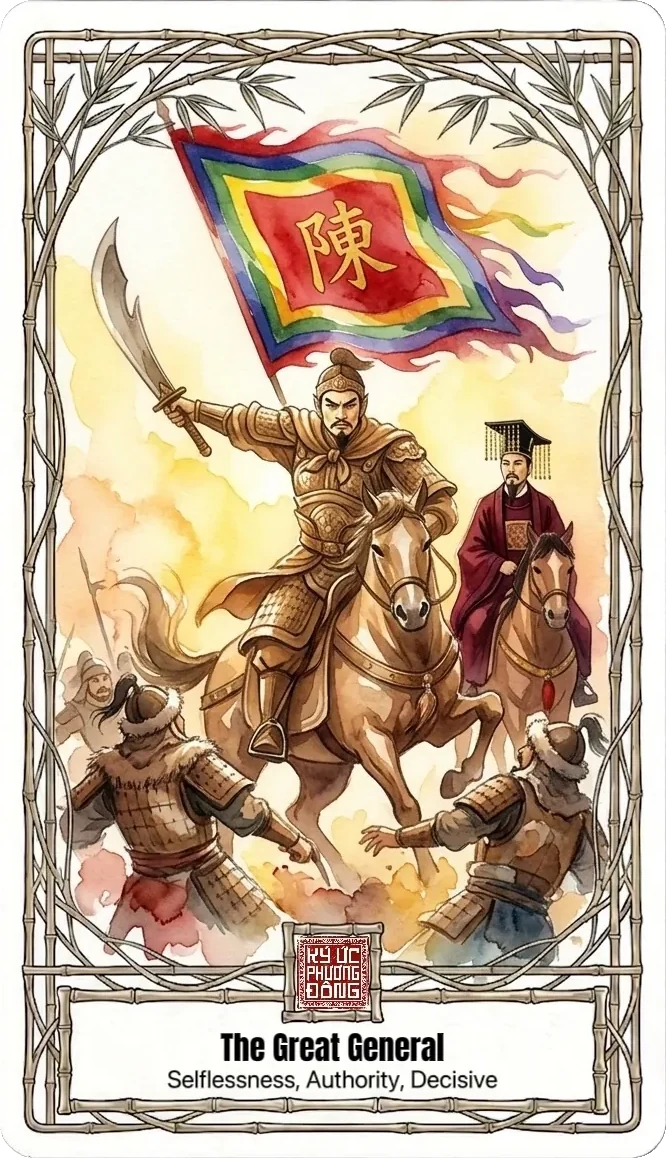
The Great General
“Three times the Mongols came for Đại Việt. Three times one general sent them home in ruins.”
| Vietnamese | Hưng Đạo Đại Vương |
|---|---|
| Kind | Heroes & History |
| In the deck | 1 of 90 cards |
The Story
In the thirteenth century, the most feared army the world had ever seen swept out of the north. The Mongols had crushed China, scorched their way across Asia, and rattled the gates of Europe. When they turned their horses toward the small kingdom of Đại Việt — the land that is now northern Vietnam — almost no one expected it to survive. It did. And the reason it did was a man named Trần Quốc Tuấn, the prince his people would come to call Hưng Đạo Đại Vương — the Great Prince of Hưng Đạo.
He did not begin life as a unifier. His own family carried a deep wound. His father, the lord known as An Sinh Vương, had quarreled bitterly with the king, Trần Thái Tông, over a marriage and a stolen bride — and on his deathbed he made his son swear to seize the throne one day and avenge him. That oath sat inside Trần Quốc Tuấn like a buried blade. He could have used the chaos of invasion to settle the old score. Instead, when the kingdom needed one heart and one army, he made a different choice.
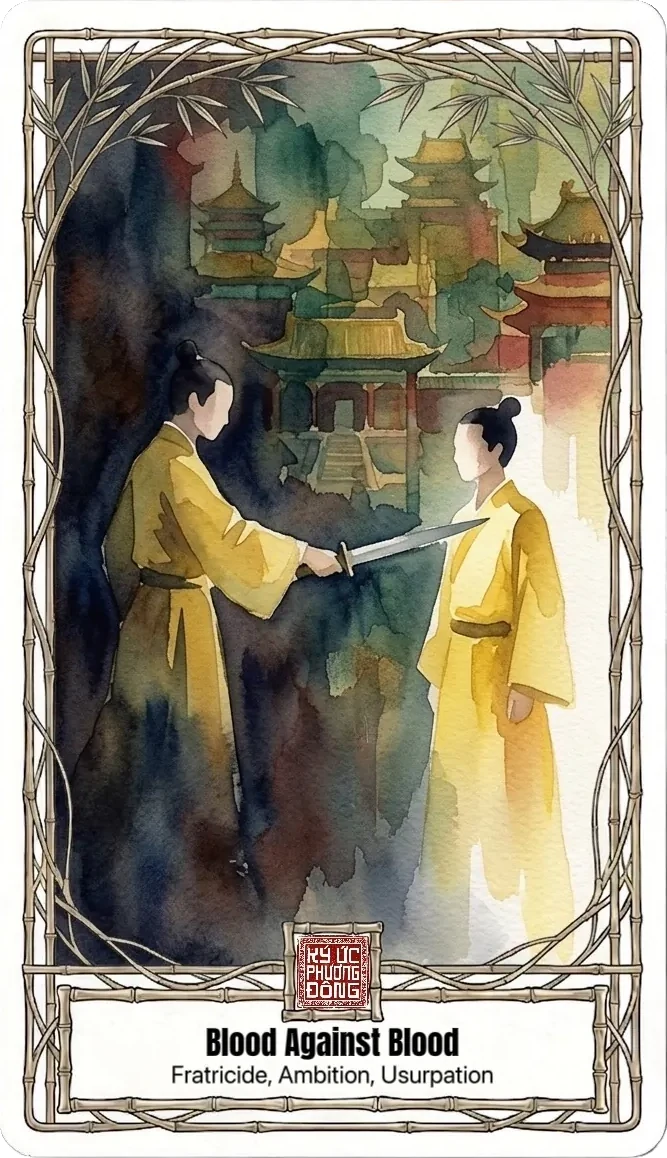
The story tells that he tested himself in the open. Walking with his closest servant, he spoke aloud of the old grudge and watched the man's face; later he asked his own sons what they thought of the oath. When one son hinted that the throne might be taken, the Great Prince drew his sword in fury and nearly struck him down for it. He had decided. The grievance died with his father. What lived on was the nation.
So when the Mongol-Yuan armies poured across the border, it was Trần Quốc Tuấn who stood at the very front — commander of all the forces of Đại Việt, his own body between the enemy and the Trần king behind him. He did not try to meet that vast cavalry head-on in open field, where it had never lost. He gave ground, emptied the cities, let the invaders march into a land that fed them nothing, then struck at their supply lines and their flanks until the great host began to starve and sicken in the heat.
To steady his officers when fear ran high, he wrote them a famous proclamation, reminding them what they were fighting for and shaming them gently out of comfort and cowardice — words that Vietnamese schoolchildren still learn by heart. And on the rivers he laid the trap that became legend: sharpened iron-tipped stakes driven into a riverbed and hidden beneath the high tide. When the enemy fleet sailed in chasing his retreating boats, the water fell, the hidden stakes rose like teeth, and the proud ships were impaled and shattered where they sat.
Three separate times the empire came, and three times he turned it back. When it was finally over, the king offered him the highest honors, even power that edged toward the throne itself — and he refused them all, asking only to serve. He spent his last years as the kingdom's steady pillar, and when he died the people did not let him fade. They built temples to him, burned incense, and prayed to him as a guardian spirit who still watches the borders. To this day many Vietnamese call him Đức Thánh Trần — Saint Trần — and ask his protection in hard times.
His last great gift was advice, not war. Asked how to keep the country safe, he did not name a weapon or a wall. He said the surest defense was a people who loved their leaders and leaders who eased the people's burdens — that an army with one heart could outlast any empire. "King and subjects of one mind, brothers in harmony," he taught: unity was the real fortress.