Welcome to Orime!
Choose your theme
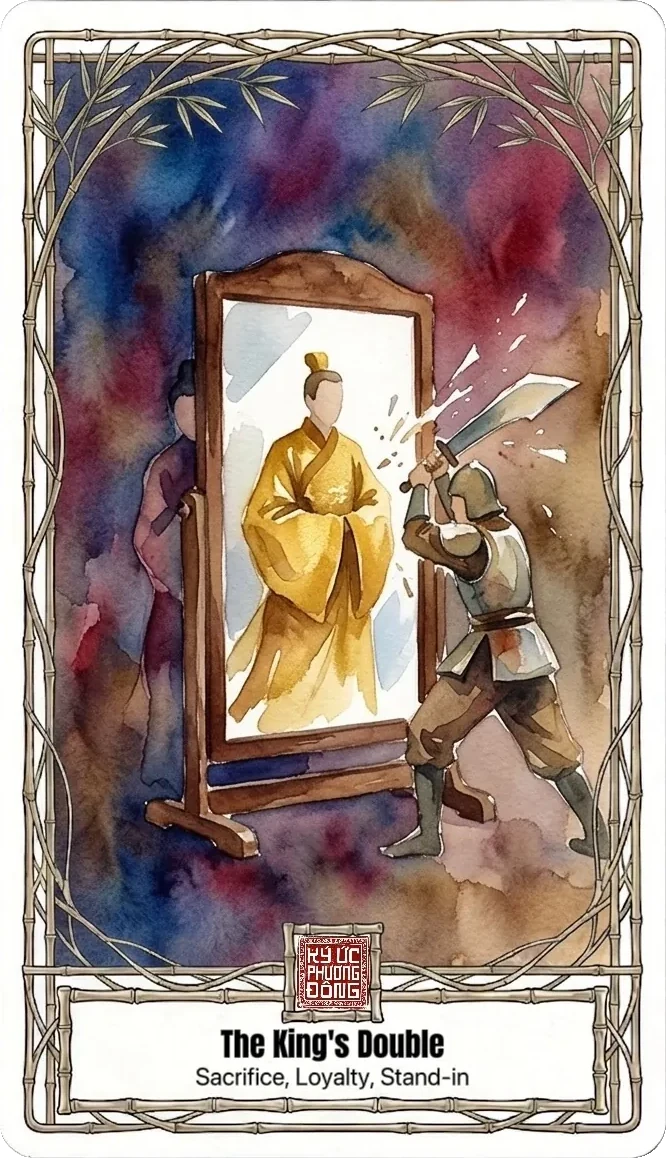
The King's Double
“Cornered on a mountain, one man put on the king's robes and walked out to die so the king could live.”
| Vietnamese | Lê Lai Cứu Chúa |
|---|---|
| Kind | Heroes & History |
| In the deck | 1 of 90 cards |
The Story
The rebels were starving on the mountain. For weeks the army of Bình Định Vương Lê Lợi — the lord of the Lam Sơn uprising, the man who would one day drive the Ming invaders out of Vietnam — had been trapped on Chí Linh Mountain, ringed by enemy troops who only had to wait. Food ran out. Horses were eaten. The grand cause of freeing the country had shrunk to a single, brutal question: how do you escape an army that already has you surrounded?
Lê Lợi gathered his closest men and asked the thing no commander wants to ask. Was there anyone willing to take his place — to dress as the king, to draw the enemy's whole hungry attention onto himself, and to die for it — so the real king and the cause might slip away? It was not a mission anyone expected to survive. It was a request to be killed in someone else's clothes.
A man named Lê Lai stepped forward. He was a soldier, not a prince; he had no throne to lose and no songs written about him yet. He simply understood what Lê Lợi could not say aloud: that the rebellion lived or died with one person, and that person was not himself. So he asked for the royal robes.
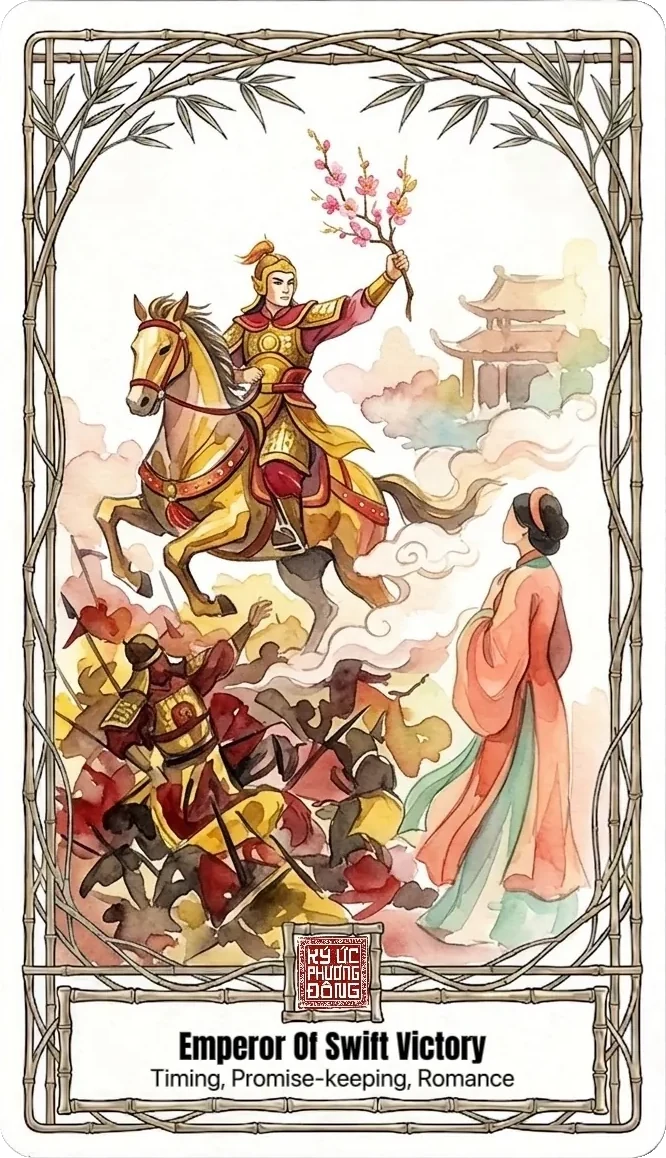
They dressed him as the commander-in-chief. Lê Lai mounted up, took a small band of fighters, and rode straight at the besiegers — loud, visible, unmistakably 'the king.' He led a charge meant to be seen. And the enemy, certain they had finally cornered the leader of the whole revolt, swung the weight of their force toward him, away from the mountain paths where the real Lê Lợi was quietly getting out.
Lê Lai fought as the king and fell as the king. The robes did exactly what they were meant to do — they fooled the enemy, and they cost him his life. By the time the Ming realized the man they had killed was a stand-in, the true commander was gone, the army was alive, and the cause that would eventually free the country was still breathing.
Vietnam never forgot him. The phrase 'Lê Lai cứu chúa' — Lê Lai saving the lord — became a byword for the highest kind of loyalty: the loyalty that asks for nothing back. The story goes that Lê Lợi, once he became king, ordered that Lê Lai be honored before himself in the rites — so that for generations the man who died in another's robes would be remembered a day ahead of the one he saved.