Welcome to Orime!
Choose your theme
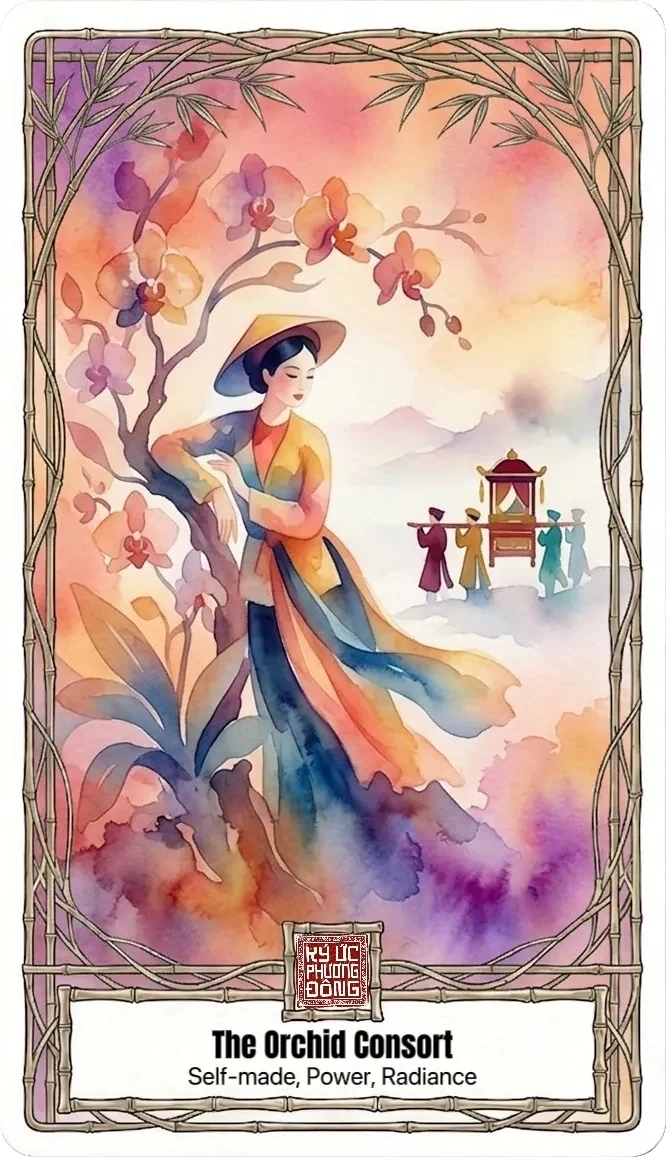
The Orchid Consort
“A peasant girl picking mulberries stopped a king's procession — and rose to rule a dynasty twice over.”
| Vietnamese | Nguyên Phi Ỷ Lan |
|---|---|
| Kind | Heroes & History |
| In the deck | 1 of 90 cards |
The Story
She was a village girl with no title, no family name worth recording — just a pair of quick hands and a basket, working among the mulberry rows the way every poor girl her age did. People later called her Ỷ Lan, "Leaning on the Orchid," because of where the king first saw her: standing beside a flowering orchid bush at the edge of the fields while the whole village ran out to gawk at his passing palanquin.
That was the strange thing. When the procession of King Lý Thánh Tông came down the road, every other girl dropped her work and rushed to the front, hoping to be noticed. She didn't. She stayed where she was, leaning against the orchid, calm as still water. And it was precisely that stillness — one girl who did not chase him — that made the king order his carriers to stop. He had her brought forward. He spoke with her. And he found, behind the plain clothes and the mulberry-stained fingers, a mind as sharp and steady as any scholar's.
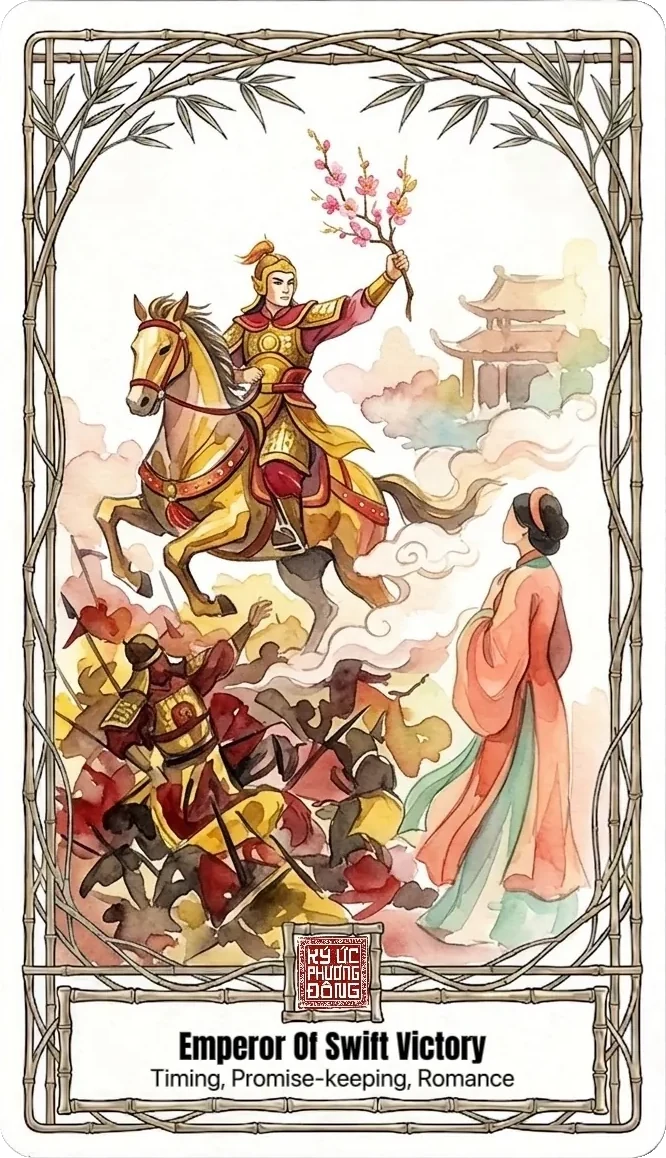
He took her into the palace. The court sniffed at the commoner from the fields, but the king had not chosen a pretty face — he had chosen a partner. When royal duties called him away to war in the south, he did something almost unheard of: he left the kingdom not to a minister, not to a general, but to her. Ỷ Lan became regent, ruling in his absence.
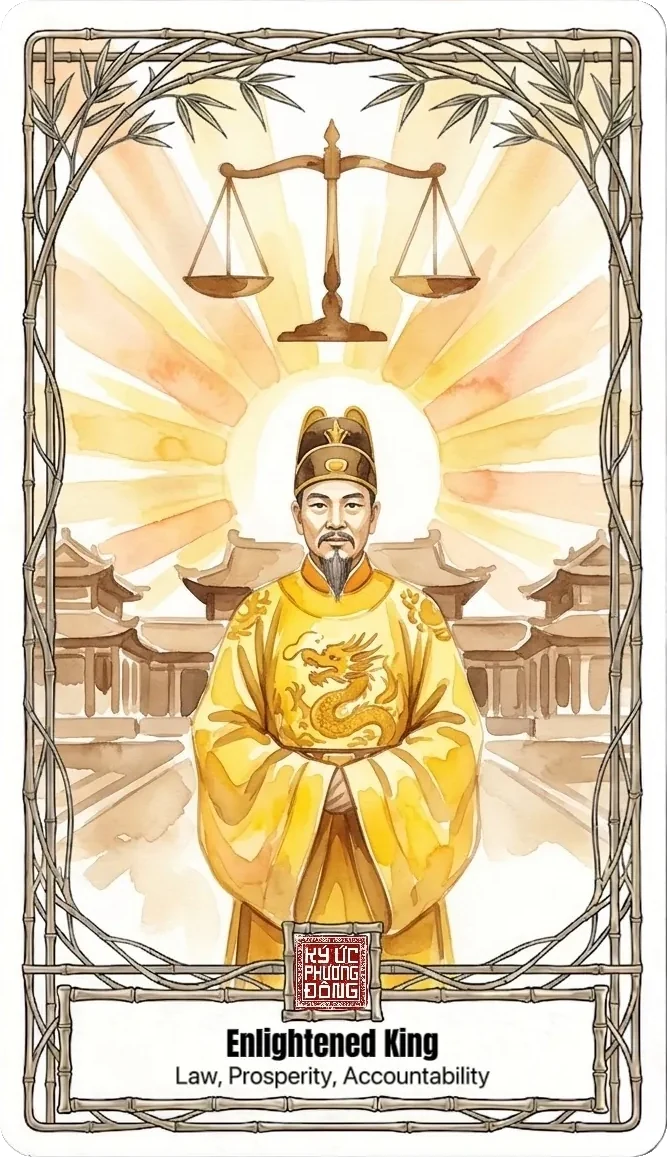
She was extraordinary at it. While the king was gone, the land suffered drought and the people grew restless. She opened the granaries, eased the burden on farmers, settled disputes, and kept order so well that the story goes the king, hearing how peacefully his realm ran without him, felt half-ashamed and pushed harder to win his own campaign. The girl from the mulberry fields was governing a country, and governing it better than men born to the work.
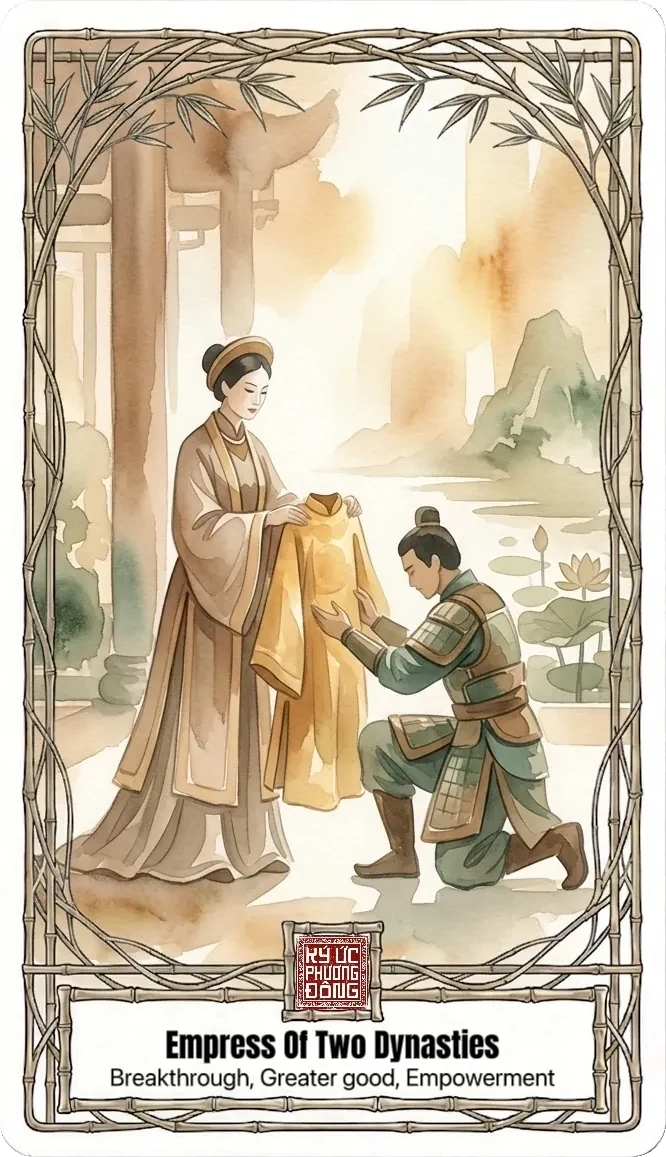
Her greatest gift to the dynasty was a son — Prince Càn Đức, who would become King Lý Nhân Tông. With an heir secured and her husband gone, Ỷ Lan rose again, this time as the power behind a child-king's throne. Twice in her life she held the reins of the Lý dynasty, and under her steadying hand the kingdom found one of its longest stretches of peace and plenty.
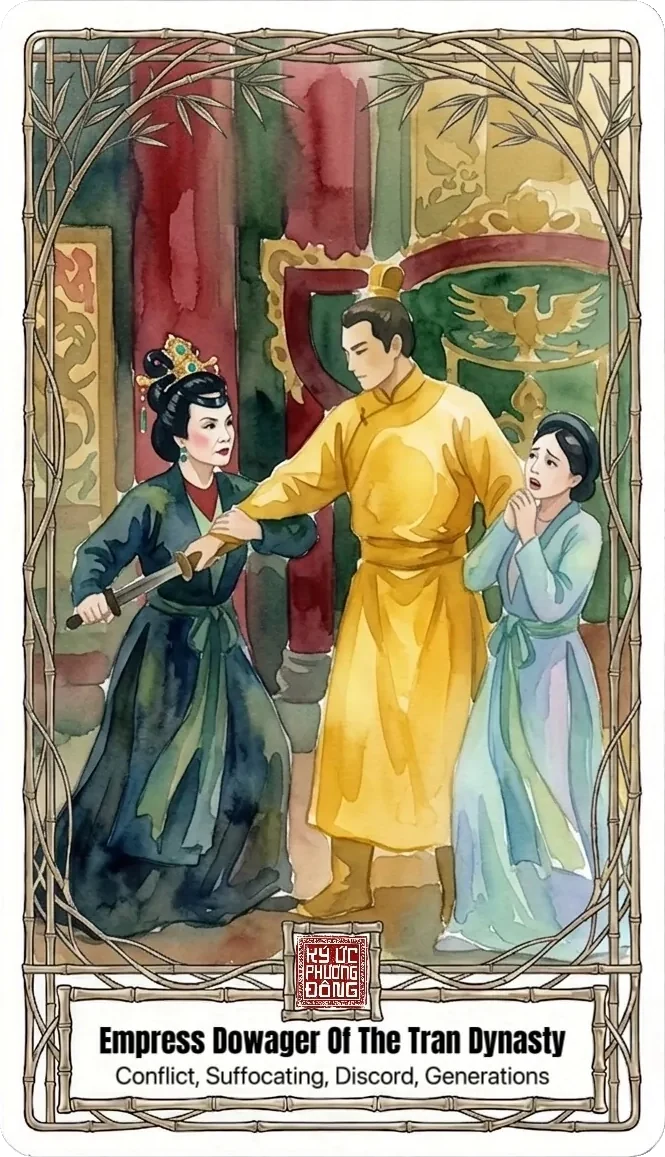
Power, though, is never clean. Reaching the top, she also did what those who reach the top so often must: she removed rivals to protect her son's claim, and that ruthlessness left a shadow over her name even as the country prospered. In her later years she turned much of her fortune to good — building pagodas, freeing women sold into servitude, ransoming the poor out of debt — as if to balance the ledger of a life lived all the way at the summit. She died honored, wealthy, and powerful, the orchid-bush girl who had become one of the most remarkable rulers Vietnam ever knew.
From zero to the center of everything — that is her whole arc. Nobody handed her a thing. She built her standing out of nothing but nerve, intelligence, and an unmistakable presence that made a king halt his horses for her.