Welcome to Orime!
Choose your theme
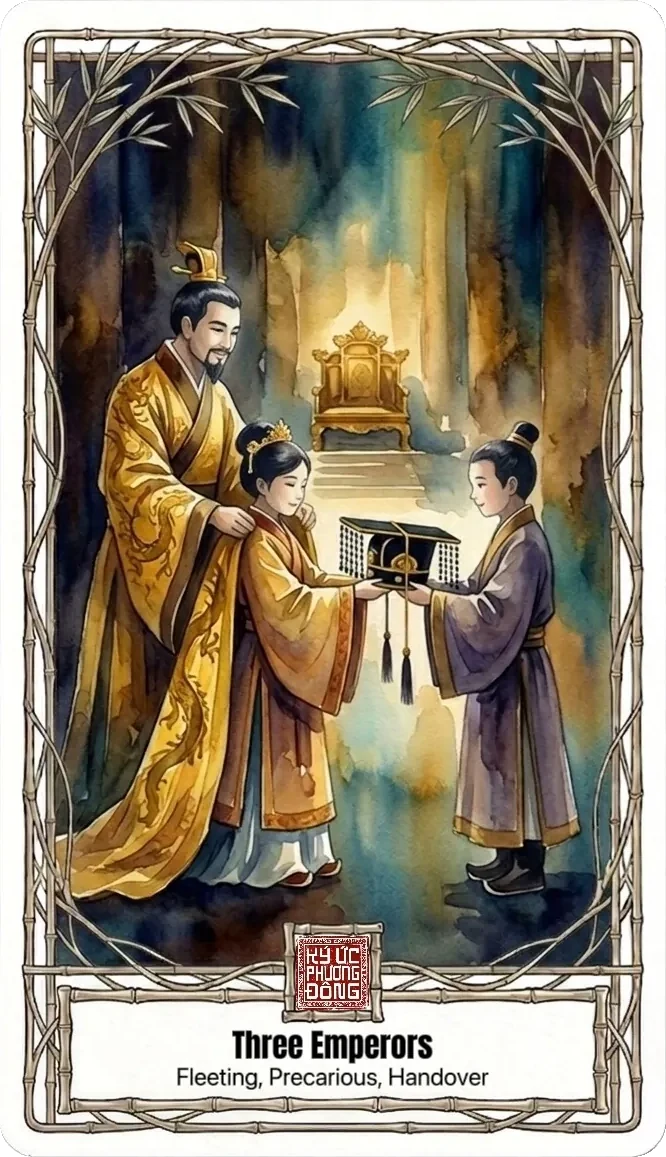
Three Emperors
“Three rulers, one crumbling throne, and a little girl handed a crown only so someone else could take it.”
| Vietnamese | Tam Vị Hoàng Đế |
|---|---|
| Kind | Heroes & History |
| In the deck | 1 of 90 cards |
The Story
Near the end of the Lý dynasty, the court of Đại Việt — the old name for northern Vietnam — was rotting from the inside. King Lý Huệ Tông, the reigning monarch, was unwell in body and spirit, prone to fits and visions, increasingly unable to rule. The real power had drifted into the hands of an ambitious clan at court, the Trần family, who held the army and the granaries and were quietly tightening their grip on everything that mattered.
The king had no son. He had only a daughter, a small child named Lý Chiêu Hoàng. And so, with the dynasty failing around him, Huệ Tông did the unthinkable: he placed the crown on the head of a little girl and named her empress in her own right. She became the only female sovereign in Vietnam's long line of rulers — and the last of the Lý kings. A child sat on the throne of an empire, her tiny hands resting on a power she could not possibly wield, while grown men with armies stood behind her, smiling and waiting.
The Trần clan did not need to fight a war. They had something quieter and far more clever. They arranged for a boy from their own family, Trần Cảnh, to be brought into the palace as the empress's companion — a playmate, a servant of her household, a familiar little friend. The two children grew close in the way children do, sharing games in the cold corridors of a dying court that neither of them understood.
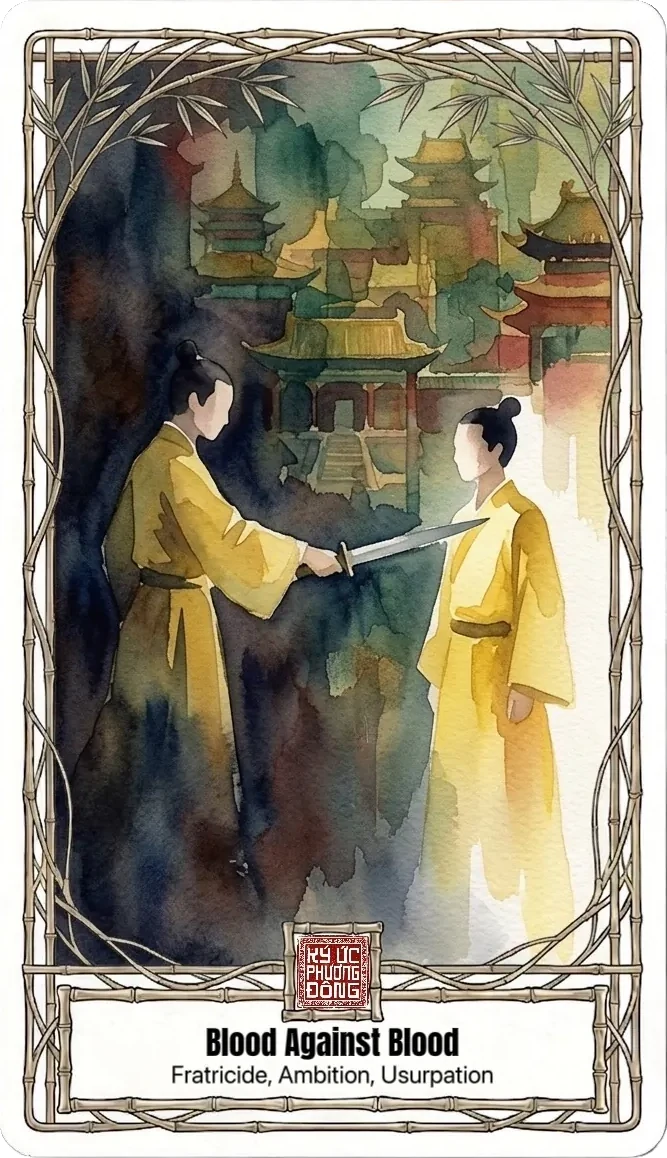
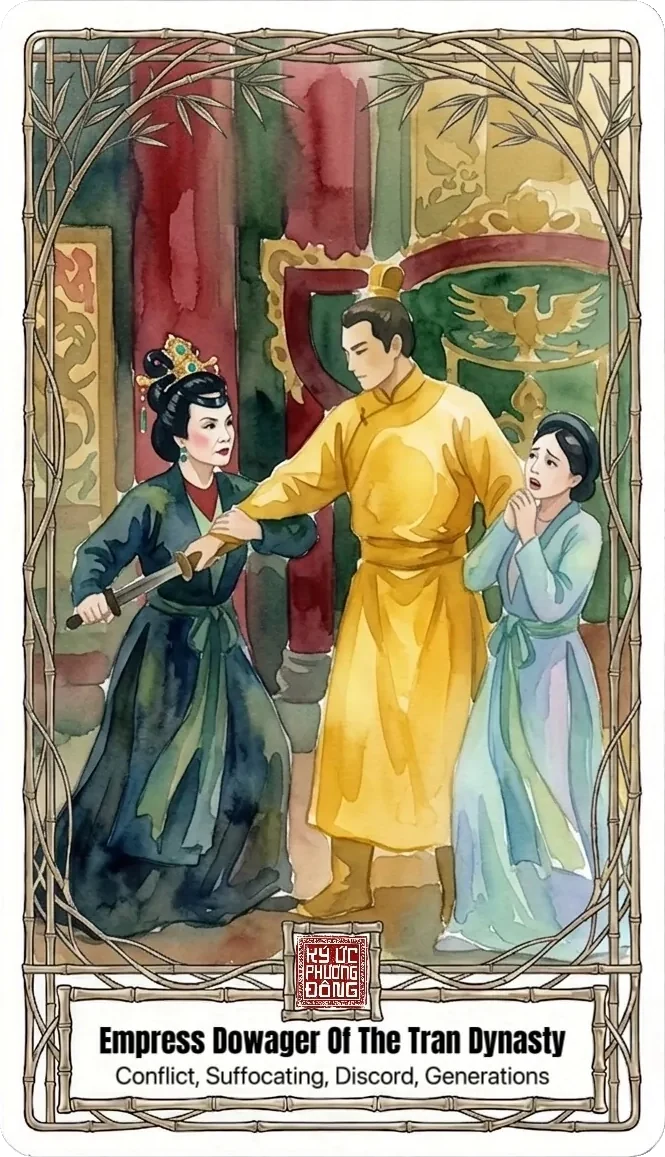
Then the trap was sprung. The child empress was married to her young companion, and once they were wed, she was made to do the one thing the whole scheme required: she abdicated, handing the throne to her husband. With a single ceremony, the mandate of heaven passed from the house of Lý to the house of Trần. The boy became King Trần Thái Tông, founder of a new dynasty that would go on to defeat the Mongols and rule for generations. And the girl who had been an empress became merely his wife — and not even that for long, for her position too would later be taken from her when it suited the court.
Picture the throne room on the day of the handover: the bells, the bowing ministers, the incense smoke curling toward the rafters — and at the center of it all, two children who had been crowned and married and shuffled like pieces on a board, neither of them choosing any of it. Lý Huệ Tông, the old king, ended his days as a monk, and even that refuge would not save him. The whole transition, dressed up in ceremony, was a cold and bloodless theft of a kingdom.
What stays with you about the Three Emperors is not the triumph of the Trần or the failure of the Lý. It is the small figure in the middle — Lý Chiêu Hoàng, who was never allowed to be a real ruler and never allowed to simply be a child. She held the highest seat in the land and owned none of it. She carried the weight of a dying dynasty and the birth of a new one across her thin shoulders, and history remembers her mostly as the door through which power walked from one family to the next.
Hers is the loneliest kind of importance: to sit at the center of everything and direct none of it, to be the hinge the whole world turns on, and to be discarded the moment the turning is done.