Welcome to Orime!
Choose your theme
War Of The Lords
“For two centuries the Gianh River split Vietnam in two, and brothers of the same blood became sworn enemies across the water.”
| Vietnamese | Trịnh - Nguyễn Phân Tranh |
|---|---|
| Kind | Heroes & History |
| In the deck | 1 of 90 cards |
The Story
Imagine a country torn down its middle by a single river. For more than two hundred years, that was Vietnam — and the wound had a name: the Trịnh–Nguyễn Phân Tranh, the War of the Lords.
On paper, the land still belonged to a king of the Lê dynasty. But the king had become a figurehead, a gilded chair with no one truly sitting in it. The real power had slipped into the hands of two great noble clans — the Trịnh lords, who ruled the north from the old capital, and the Nguyễn lords, who carved out the south. Both bowed to the same emperor. Both claimed to serve him. And both meant, in their hearts, to swallow the whole country.
The line between them came to rest on the Gianh River — a narrow ribbon of water in central Vietnam that, almost overnight, hardened into a border. To the north of it, one people; to the south, the same people, now strangers. Families were cut in half. A village on one bank could no longer freely cross to the village on the other. The river that had once carried fishing boats and wedding processions now carried suspicion.
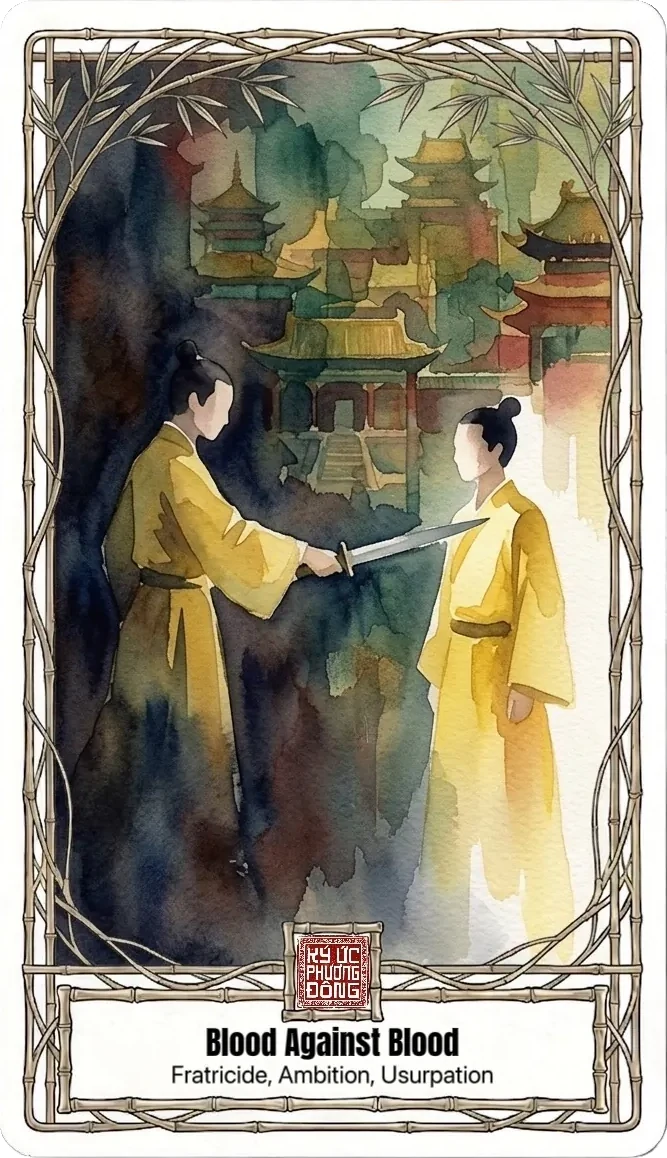
And so the wars came, again and again. The southern Nguyễn raised long defensive walls and held their ground; the northern Trịnh marched down to break them and were thrown back. Campaign after campaign, generation after generation, the armies bled each other white — and neither side ever truly won. The fighting was less a clash of foreign empires than something far sadder: 'kin devouring kin,' people of the same roots and the same bloodline killing each other for the right to rule.
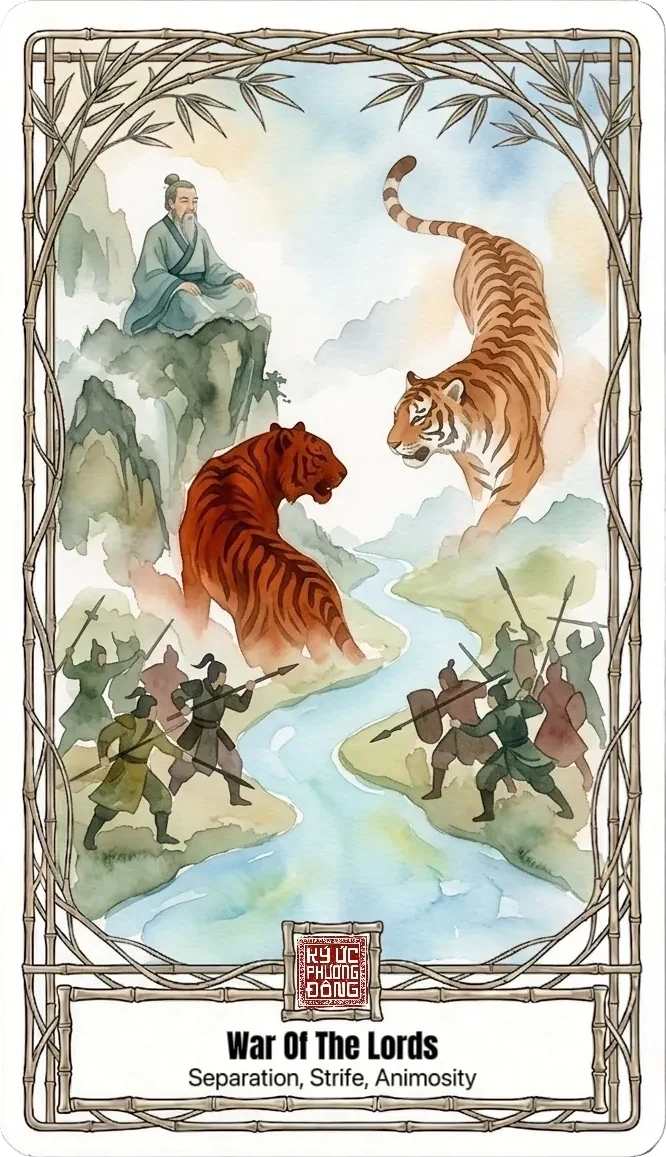
There is an old image that fits this card perfectly — two tigers fighting from a mountain perch. Picture two great beasts locked in a death-grip on a high ridge, each so determined to destroy the other that both end up clawed, exhausted, and ruined, while the valley below watches the whole thing burn. That was the War of the Lords. Two magnificent powers, tearing each other apart over a country that grew poorer with every passing year.
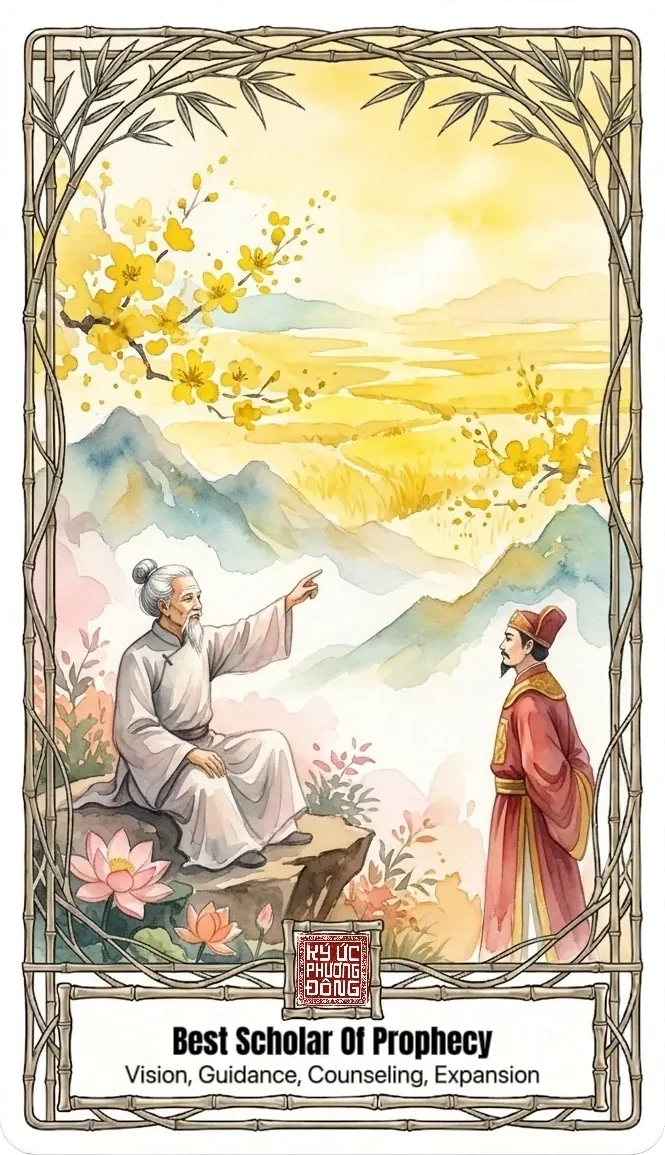
The card does not paint the smoke and the blood. Instead it shows a sage seated high on a mountain, calm-eyed, looking down at the struggle below. He is not cheering for either tiger. He has climbed above the fight precisely because, from up there, he can see what the combatants cannot — that this is a contest no one wins, only a slow mutual exhaustion dressed up as glory.
And in the end, that is exactly how it played out. The walls fell, the lords faded, the dynasties were swept away by later storms. The power everyone had killed and died for simply dissolved. What outlasted it all was something quieter and older: the bonds of family and the longing of a divided people to be whole again.